


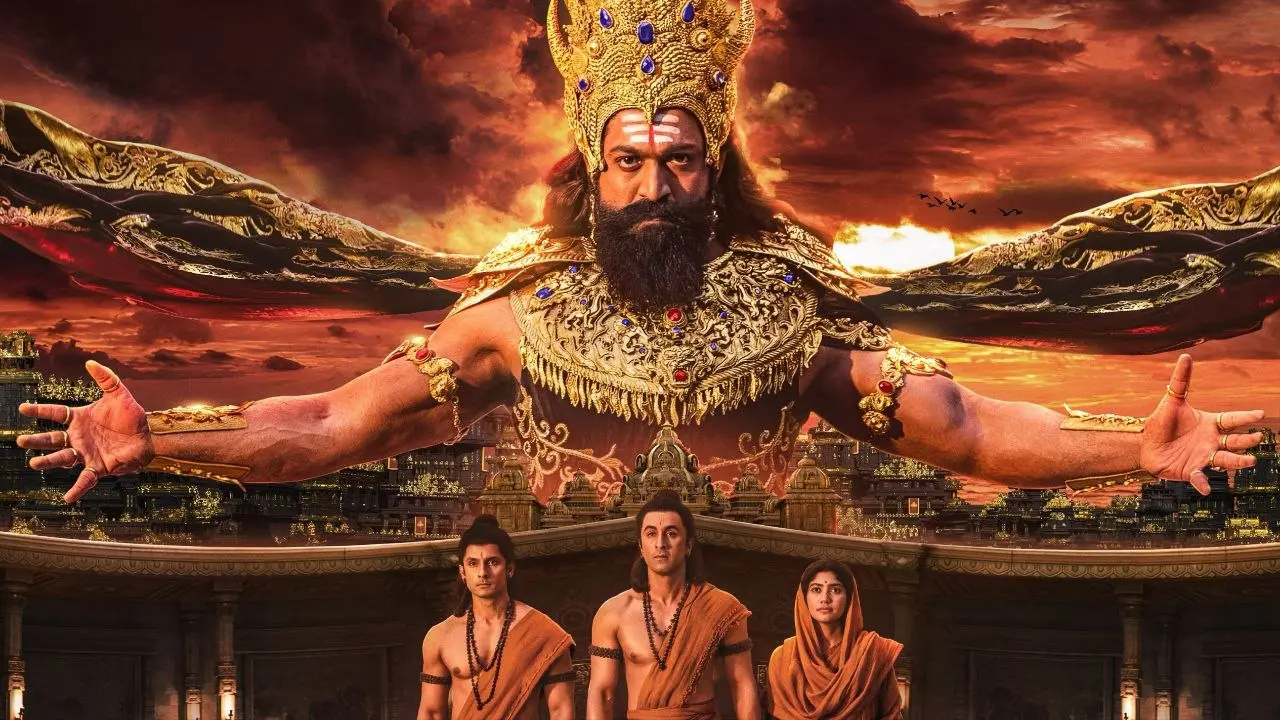
Ramayana was expected to post a monster opening in India. Before release, many in the trade believed the film would open with at least ₹100 Cr nett from the Hindi version alone.
Now, even in the best case, the film is heading for an opening of around ₹65 Cr nett in India, including all languages. And one of the biggest reasons is high ticket prices.
Pre-Diwali Effect? Not for This Film
Some may point to the pre-Diwali period, when audiences are busy with festival shopping and travel. But for an epic like Ramayana, that effect shouldn’t be big. A film of this scale and emotional value is one audiences want to watch as early as possible.
That leaves ticket pricing as the biggest factor holding back the opening.
Ramayana All-India Advance Booking (Opening Day, as of 9 PM IST)
- Gross: ₹47.11 Cr
- Tickets: 12,83,083
- Shows: 25,931
- Average Ticket Price: around ₹367
Note: these figures include 3D charges, which raise the average ticket price a little.
The Hindi Version Tells the Story
The language-wise numbers show the problem clearly. The Hindi version has the highest ticket prices, and the lowest occupancy of all five languages.
Ramayana Language-Wise Advance Booking
- Hindi: ₹35.33 Cr, ATP ₹442, Occupancy 19.1%
- Kannada: ₹5.07 Cr, ATP ₹380, Occupancy 33.3%
- Telugu: ₹4.22 Cr, ATP ₹189, Occupancy 28.1%
- Tamil: ₹1.77 Cr, ATP ₹191, Occupancy 24.3%
- Malayalam: ₹71.58 L, ATP ₹203, Occupancy 25.8%
The Hindi version is spread across 20,873 shows but is filling only about one in five seats. The South Indian versions, with much cheaper tickets, are all running at better occupancy.
The Telugu version is a good example. It has sold over 2.23 lakh tickets, but at an average price of just ₹189, it has grossed ₹4.22 Cr.
High-Price States Struggle
The state-wise data shows the same pattern. In the big Hindi markets, where tickets are expensive, occupancy is low.
Ramayana States: High Prices, Low Occupancy
- Delhi: ATP ₹698, Occupancy 23.0%
- Maharashtra: ATP ₹527, Occupancy 17.1%
- Haryana: ATP ₹516, Occupancy 13.7%
- Gujarat: ATP ₹412, Occupancy 12.6%
- Punjab: ATP ₹405, Occupancy 10.2%
Lower Prices, Fuller Shows
In states with lower prices, the shows are much fuller.
Ramayana States: Lower Prices, Higher Occupancy
- Andhra Pradesh: ATP ₹159, Occupancy 26.9%
- Tamil Nadu: ATP ₹204, Occupancy 26.5%
- Telangana: ATP ₹244, Occupancy 30.2%
- Kerala: ATP ₹263, Occupancy 28.1%
- Odisha: ATP ₹344, Occupancy 33.1%
Karnataka is the standout. It is the top state with ₹8.39 Cr and 32.8% occupancy, even at an average price of ₹460, helped by Yash’s huge following in the state.
The City Picture
The city-wise data makes the gap even sharper. In the six top cities where the average ticket costs over ₹600, occupancy averages only around 20%.
Ramayana Top Cities: High Prices, Low Occupancy
- Noida: ATP ₹810, Occupancy 26.6%
- Thane: ATP ₹714, Occupancy 13.3%
- Delhi: ATP ₹698, Occupancy 23.0%
- Gurgaon: ATP ₹688, Occupancy 13.8%
- Mumbai: ATP ₹662, Occupancy 20.6%
- Navi Mumbai: ATP ₹626, Occupancy 22.6%
In cities where tickets cost under ₹400, occupancy averages close to 38%, almost double.
Ramayana Top Cities: Lower Prices, Higher Occupancy
- Chennai: ATP ₹202, Occupancy 36.1%
- Hyderabad: ATP ₹278, Occupancy 33.9%
- Mysore: ATP ₹366, Occupancy 45.4%
- Kochi: ATP ₹395, Occupancy 38.0%
Hyderabad vs Mumbai
The clearest example is Hyderabad and Mumbai. Hyderabad has sold over 1.08 lakh tickets, more than any other city and more than double Mumbai’s 51,547. But because tickets in Hyderabad average just ₹278, compared with ₹662 in Mumbai, Hyderabad’s gross (₹3.01 Cr) is still lower than Mumbai’s (₹3.41 Cr).
Hyderabad vs Mumbai
- Hyderabad: 1,08,287 tickets, ATP ₹278, Gross ₹3.01 Cr
- Mumbai: 51,547 tickets, ATP ₹662, Gross ₹3.41 Cr
More people are clearly turning up where tickets are affordable.
What It Means
The numbers suggest that many audiences, especially families, are holding back because of the high prices in the big Hindi markets.
If word of mouth is strong, the Diwali holidays could still bring in big crowds. But the opening shows how much pricing can hold back even the biggest film in Indian cinema.